
Superabsorbents by Evonik
Work behind the scenes
In 1986, Evonik's Krefeld site became the world's first large-scale manufacturer of superabsorbent polymers. Since then, thanks to ongoing innovation, Evonik has retained a top position in the market.
Our research efforts center on the marketplace, our customers and product development. That means we work with our customers to find solutions to their problems and to improve their products, because each individual product requires its own specific type of superabsorbent polymers.
Network
Superbsorbent polymers consist of a network of hydrophilic polymer chains. Their primary characteristic is their ability to absorb liquids and keep them trapped, even under pressure. That means that unlike sponges, which hold water only briefly and release it when squeezed, superabsorbent polymers turn liquids into gels that trap and hold fluid. Depending on the type of liquid, the products can absorb 30 times their own volume. In the case of desalinated water, they can even hold 500 times their own volume. Our research department takes advantage of this basic principle to design special polymers for different uses. New products and applications are being called for all the time. Thanks to ongoing improvements by our researchers, superabsorbents are now more effective than ever and can be found in many different hygiene articles.
THINNER, MORE LIGHTWEIGHT DIAPERS
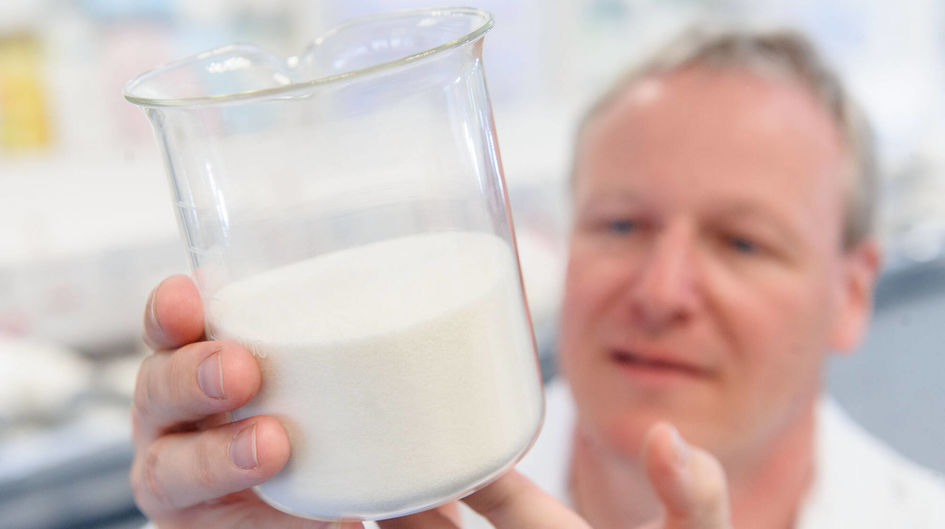
Thirty years ago, the absorbent core in baby diapers was made of cellulose fibers. For example, a typical large-size baby diaper in the year 1987 contained 50 grams of cellulose and only two grams of superabsorbent polymers. Today, the ratio of the two ”ingredients” is nearly 1:1. In 1999, a typical diaper contained 18 grams of cellulose and 15 grams of superabsorbent polymers. That means diapers have become thinner and more lightweight. It also means that the products have assumed the function previously fulfilled by cellulose. At the same time, thanks to the increased ratio of superabsorbents, the total absorption level – the diaper’s ability to absorb fluid – has increased fourfold, from 100 to more than 400 grams of liquid.
Optimal distribution of liquids
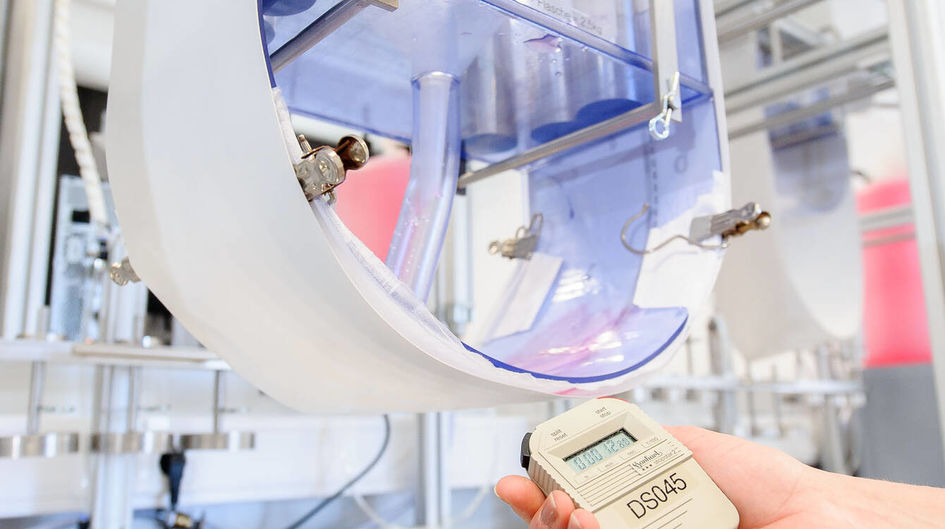
As generations of new superabsorbent polymers have been developed, our researchers have succeeded in continually improving their absorbent qualities. In 1986, the most important feature of these products was the amount of liquids they could hold. The next generation of superabsorbent polymers was not only capable of absorbing fluid, it was also able to keep liquids trapped inside, even under pressure. In 1996, we succeeded in increasing the speed with superabsorbent polymers take on liquids, which meant diapers could be made even thinner than before. In 1998 our researchers optimized the distribution of liquids within the diapers. Now the entire absorbent area of the diaper is used to the fullest in all infant diapers. In order to do so, we had to "teach" the polymers to build a barrier and retain fluid by forming a solid gel structure. We were able to increase the permeability of the gel, so liquids can be spread out over larger areas of the diaper, which consists of a mixture of cellulose and superabsorbents.